

What is a digital signage CMS?
Every signage vendor calls their product "software," but only part of that is the CMS specifically. Here’s the precise definition, how it differs from the broader phrase "digital signage software," and what CloudyFy TV’s CMS actually covers.
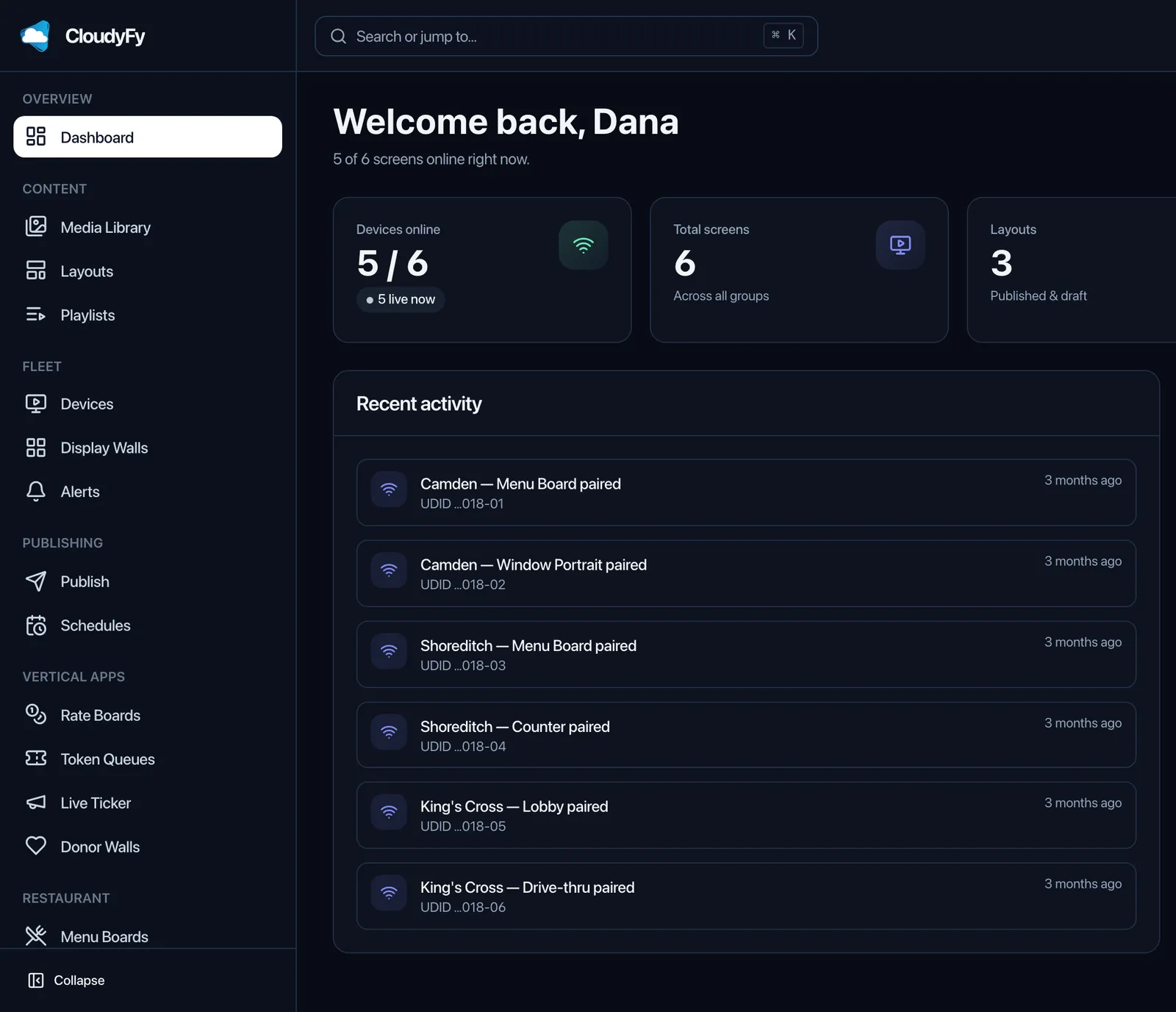
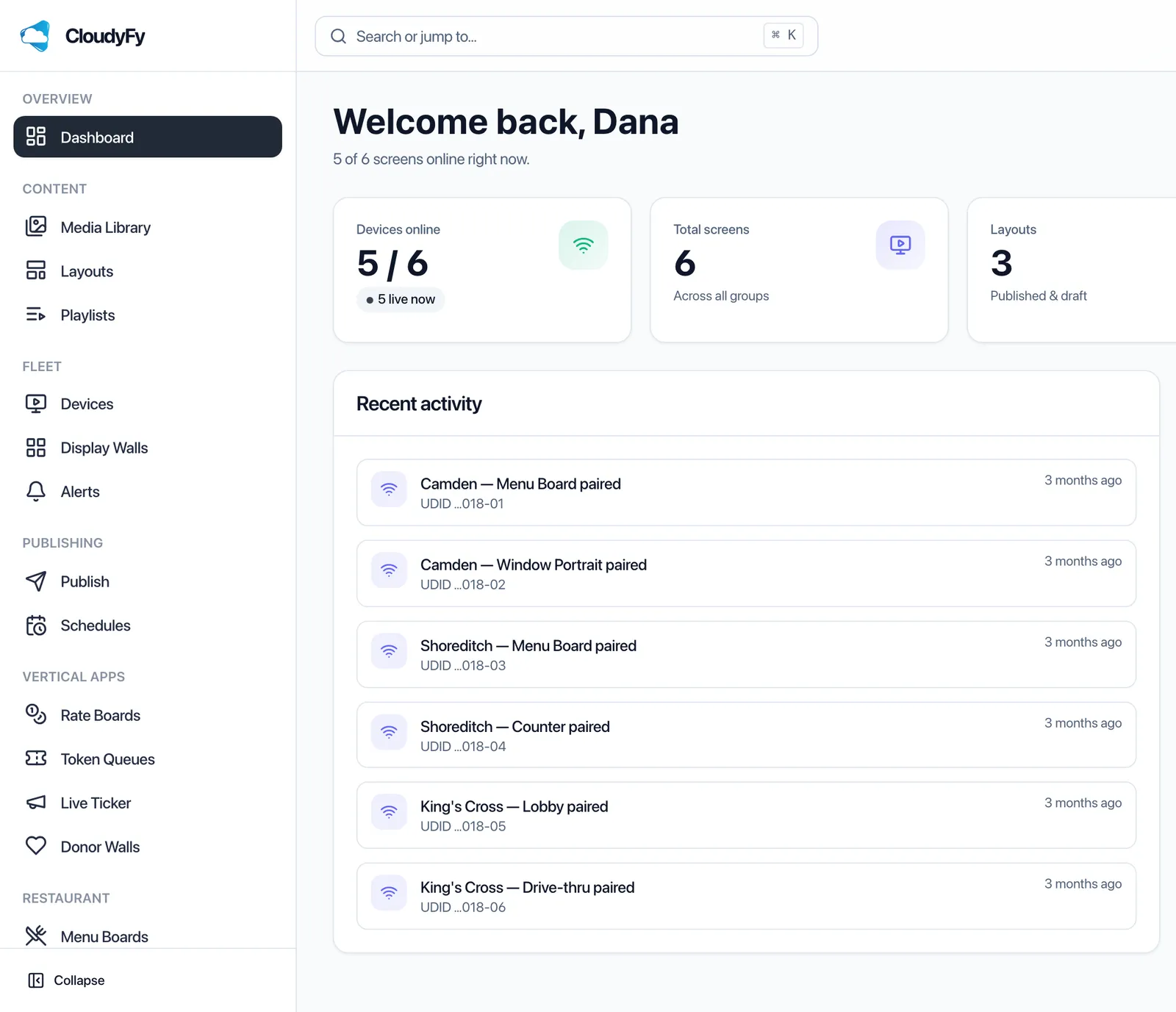
- Digital signage CMS
- A digital signage CMS is the browser-based software where you design what your screens show: layouts, playlists, schedules and device settings. It is the control layer of a signage deployment. The CMS does not itself display anything; it sends finished content out to players running on connected devices.
Digital signage CMS vs digital signage software
Digital signage CMSvsDigital signage software
"Digital signage software" is the broader marketing umbrella, meant to cover the whole product: the CMS, the player app, hosting and device management together. "CMS" specifically names the design and management console, the part you log into and build things in. The two get used interchangeably in search and in vendor copy, which can hide whether a "software" claim actually includes the player and device management or only the design tool. In CloudyFy TV, there’s no separate purchase for these pieces. The CMS is the browser console; it works with the player app that runs on your devices, and both are covered under the same plan.
How does the CMS work in CloudyFy TV?
CloudyFy TV’s CMS is one browser application covering the layout builder, playlists, the four-step publish wizard, scheduling, device management, proof-of-play reporting, roles and billing, all under one login per company. A change made in any of those modules, publishing a layout, editing a schedule, updating a rate row, reaches connected players over the same sync path, typically within a few seconds for live-data changes. Multiple users can work in the CMS at once under role-based permissions, so a marketing user editing a layout and an IT admin managing devices aren’t stepping on each other.That breadth runs deep under the hood too: CloudyFy TV’s CMS exposes its functionality through 523 REST API routes, more than ten times the 53 paths documented in its own public OpenAPI spec today.